Everyday beauty · Journal 03
Sheet and Facial Masks: Reading Instructions and Setting Expectations
General educational reading. This article has not received medical review and does not provide a diagnosis, individual treatment plan or promised result. Seek an appropriate professional for individual health or legal advice.
A facial mask can be an enjoyable part of a quiet evening, but the large selection makes a simple purchase surprisingly confusing. Sheet, rinse-off and other formats come with different instructions. Before choosing one, decide what you are looking for: an optional moment of self-care, help with a particular cosmetic concern, or an answer to a persistent skin problem. Those are different reasons, and the packaging alone cannot resolve all of them.
Decide what the extra step is for
The AAD's facial-mask guidance explains that masks may support some skincare goals, depending on their ingredients, but do not replace the ordinary routine or treatment for conditions such as eczema and acne. It also warns that unsuitable ingredients or overly frequent use can irritate skin. A mask is an optional product to assess, not a requirement for a complete beauty routine.
Write down your main question before comparing packages. For example, you might want to know whether the product is intended to be washed off or whether it overlaps with a product you already use. A clear question makes the shopping decision more useful than collecting a set of promises such as glow, reset or transformation.
Read beyond the front of the packet
The FDA's cosmetic-safety guidance advises reading the full label, following directions and warnings, and washing your hands before use. Treat the back of the packet or enclosed leaflet as part of the product. If the text is difficult to read, photograph it in good light or ask the manufacturer for clear instructions before opening it.
Check these details together:
- Where the mask is intended to be applied, including areas to avoid.
- How long it should remain on the skin.
- Whether and how it should be removed, rinsed or followed by another step.
- How often the manufacturer intends it to be used.
- Whether the directions identify combinations or circumstances to avoid.
Do not transfer the instructions from a previous mask to a different format. A product you once used overnight does not establish that another can stay on until morning. If the removal step is unclear, resolve that question first; the word mask does not tell you the whole method.
Check what is already in your routine
The AAD advises avoiding unnecessary duplication of active ingredients, particularly when other products contain retinol or acids. It recommends following the stated application time and removing the mask promptly if itching, burning or stinging occurs. Leaving it on longer is not an evidence-based shortcut to a better result.
Put your regular products and the proposed mask on one list. Include occasional products, not just the cleanser beside the sink. You can take this list to a pharmacist or dermatologist if you are unsure about the combination. Keep prescribed instructions separate and ask the prescribing clinician before changing that part of your care.
Plan the practical part before opening it
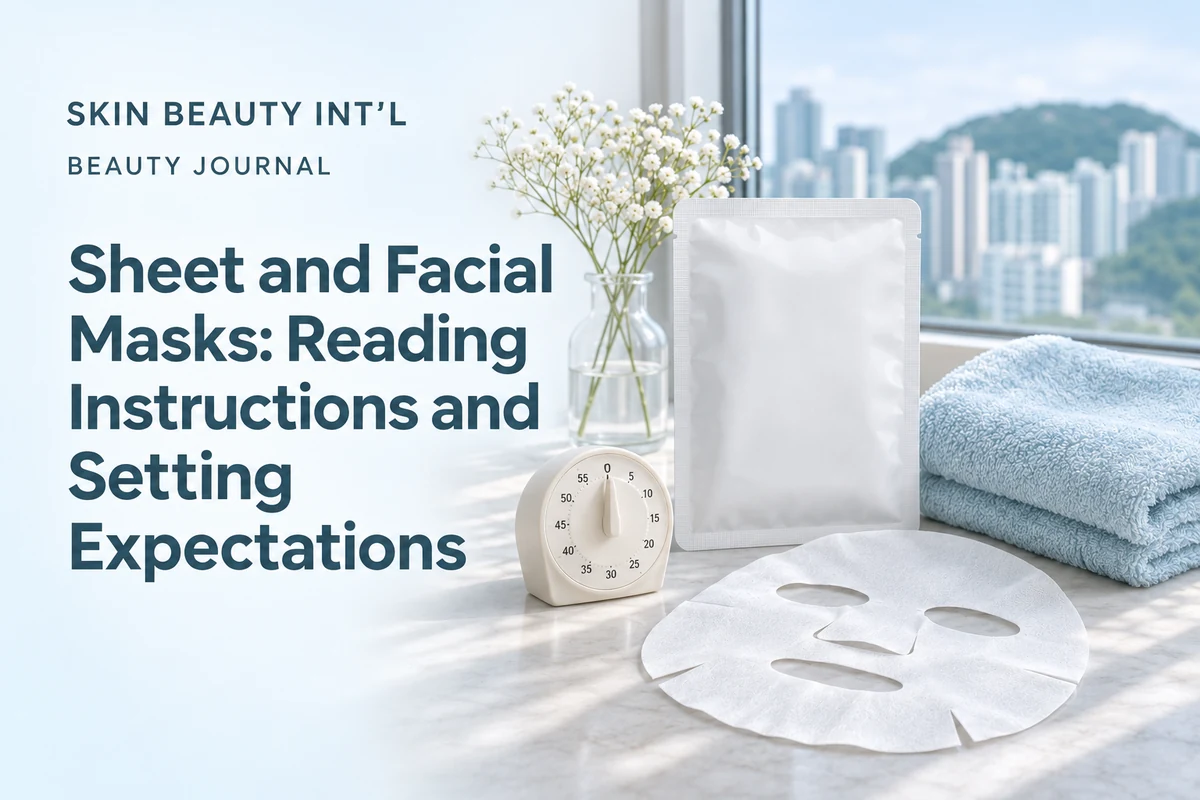
Choose a time when you can follow the directions from start to finish. Set a timer if the label gives a duration, and have the items required for removal ready. On a busy Hong Kong evening, it may be more sensible to leave the packet unopened than to begin just before a call, journey or bedtime that prevents you following the instructions.
Keep the package until you have finished reviewing the experience. A note of the product name, date, application time and anything unusual is more useful than relying on memory. Record observations in plain language. Feeling different immediately afterwards is not by itself proof of a lasting change, and an ordinary home observation does not establish a clinical result.
The FDA advises stopping a cosmetic that causes an unexpected reaction and contacting a healthcare provider about the problem. Use local healthcare advice in Hong Kong; the US reporting route on the source page is not presented here as a local service. Our Beauty Journal offers related everyday-care reading if you want to review another part of your routine separately.
Frequently asked questions
Is a mask necessary if my current routine is manageable?
No extra step is required simply because it is popular. Decide whether you have a clear reason to add it, understand its instructions and can assess how it fits with the products already in use.
Should I keep a sheet mask on until it becomes completely dry?
Follow that product's stated time and removal method. The appearance or feel of the sheet is not a substitute for the directions, and extending the session does not establish a better outcome.
Can a mask replace assessment of a persistent skin problem?
No. A cosmetic product cannot provide a diagnosis. If a concern persists, worsens or repeatedly returns, obtain professional advice instead of moving through a series of masks to find an explanation.
Does this article claim that a mask has medical approval?
No. It uses US public guidance checked on 15 November 2026 for general education in Hong Kong. It does not approve a product, assess an individual or promise treatment results.
Sources & further reading
- Do facial masks work, and should I add one to my skin care routine?
American Academy of Dermatology · United States; general consumer education, not Hong Kong regulatory approval
Source accessed 2026-11-15 (Hong Kong date). - Using Cosmetics Safely
US Food and Drug Administration · United States; general consumer education, not Hong Kong regulatory approval
Source accessed 2026-11-15 (Hong Kong date).